
.png)
Between Evil and the Innocent: The Calling of the Modern Templar
The importance of understanding the need for prepared Protectors is one of the most critical and misunderstood responsibilities of our time. In a modern society that increasingly separates faith from strength, spirit from action, and morality from responsibility, the archetype of the Protector has been weakened, diluted, and often misunderstood. Yet history, theology, and human reality all testify to the same truth: evil exists, and where evil exists, protection is not optional. It is a duty. Following the path of the Knights Templar and other Christian chivalric orders, we understand that the true Protector is forged upon two inseparable pillars, the sword and the cross. These are not symbols of contradiction but of completion. They represent combat training and faith training, physical preparedness and spiritual discipline, action guided by moral clarity.
From a biblical perspective, Scripture makes it clear that the nature of our struggle is not limited to what can be seen with human eyes. As written in Ephesians 6:12, “For we wrestle not against flesh and blood, but against principalities, against powers, against the rulers of the darkness of this world, against spiritual wickedness in high places.” This verse is often quoted but rarely fully understood. It does not deny the existence of physical violence or human aggression; rather, it reveals that behind visible acts of evil stand invisible forces that seek destruction, chaos, and despair. Evil may be spiritual in origin, but it manifests physically. It enters homes, streets, schools, and communities. It targets the weak, the innocent, and the defenseless. Therefore, to claim that only spiritual practices are necessary while ignoring physical preparedness is to misunderstand the battlefield itself.
Human beings live simultaneously in two realities, the physical and the spiritual. To deny one is to cripple the other. Many people sincerely believe that prayer, fasting, faith, and trust in God alone will be sufficient to protect their families when evil arrives. While these practices are essential and powerful, believing they replace responsibility is a mistake. A father, mother, husband, wife, brother, or sister who refuses to prepare physically under the belief that “God will handle everything” misunderstands the gift of free will and responsibility that God has given humanity. God does not reward passivity in the face of injustice. He calls His people to act, to guard, to shepherd, and to protect.
From a theological standpoint, the belief that suffering or death caused by preventable evil must automatically be accepted as “God’s will” is a flawed and dangerous perspective. God’s will includes courage, wisdom, preparation, and love in action. The inability or refusal to defend those who cannot defend themselves does not elevate one spiritually. On the contrary, neglecting this duty weakens both moral integrity and spiritual maturity. Faith that does not move the hands, strengthen the body, and sharpen the mind becomes abstract belief disconnected from reality.
Courage combined with faith forms a power far greater than either alone. There is nothing more noble, more meaningful, or more spiritually profound than a person willing to stand between evil and the weak. Children, elderly people, women, the sick, and those unable to protect themselves rely on others to be their shield. The willingness to place oneself in harm’s way for the sake of others reflects the highest expression of love. Sacrifice is not symbolic; it is lived. This is the heart of the Protector’s calling, and it mirrors the very essence of Christ’s teaching that greater love has no one than this, that someone lay down his life for others.

However, such sacrifice cannot be based on intention alone. To stand against evil effectively, one must be capable. Capability is forged through discipline, hardship, and relentless training. Combat skills, physical conditioning, situational awareness, survival knowledge, and trauma medicine are not expressions of violence but of responsibility. A Protector who lacks these skills may possess good intentions, but good intentions do not stop violence. Evil does not hesitate, and therefore preparation cannot be hesitant either. The sword, symbolic of physical capability, must be sharpened through effort, pain, and commitment.
Yet the sword alone is insufficient. History has repeatedly shown that strength without moral grounding leads to tyranny, corruption, and destruction. A person trained in combat but lacking spiritual development may become skilled in violence but blind to purpose. Without faith, discipline, and inner restraint, strength becomes dangerous rather than protective. The cross gives meaning to the sword. It defines why force is used, when it is justified, and when it must be restrained. Spiritual discipline shapes the heart, aligns the will with righteousness, and ensures that power serves love rather than ego.
This balance is the foundation of the Templar mindset and of all true Christian chivalric traditions. The sword and the cross were never meant to compete; they were meant to complete each other. In the modern world, this balance has been lost. Society increasingly promotes weakness as virtue and passivity as morality. Many believe that being Christian requires submission to evil, mistaking humility for helplessness. Turning the other cheek has been misapplied to situations where innocent lives are at stake, even though it was never meant to excuse the abandonment of responsibility toward the vulnerable.
Protectors must exist because without them, evil encounters no resistance. They are the barrier between chaos and order, cruelty and mercy, destruction and life. This was the core mission of the Knights Templar and other chivalric orders that understood faith not as retreat from the world, but as engagement with it. They prayed, they fasted, they read Scripture, and they trained relentlessly because they understood that holiness and readiness were not opposites.
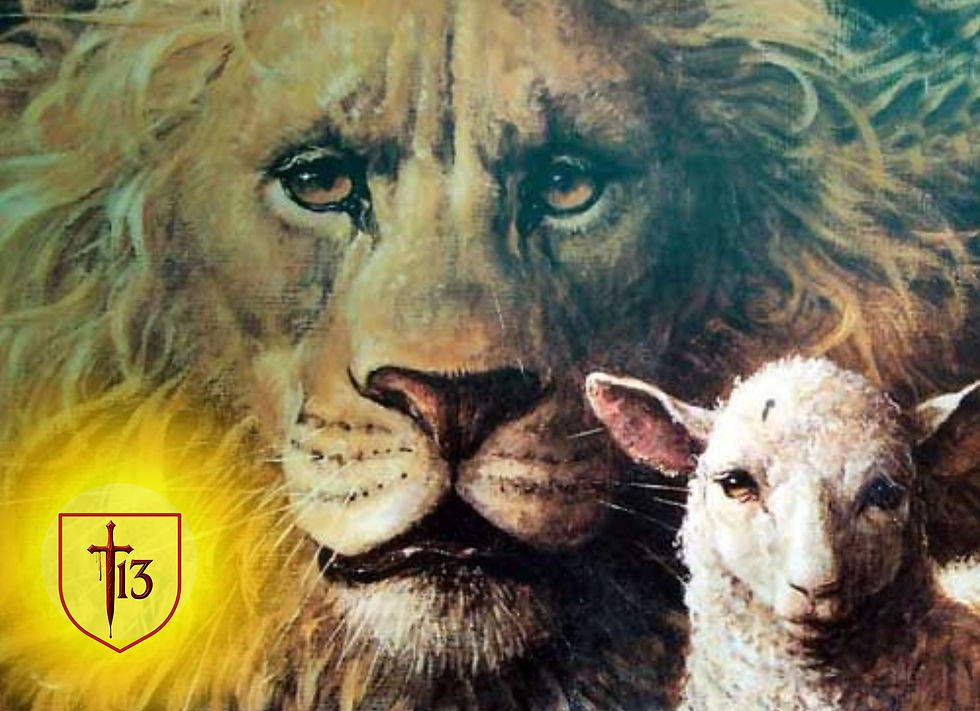
The idea of the modern Templar and the role of the Protector cannot be understood through the lens of a passive Christianity that has emerged in recent generations. This passivity is not rooted in the full biblical message, but often in simplified interpretations, translation issues, and a cultural desire for comfort rather than responsibility. When we speak about modern Templars, we are not speaking about recreating medieval orders, nor about glorifying violence, but about recovering a balanced mindset where faith and action, morality and readiness, coexist. The Protector is not an aggressor, but neither is he passive in the face of evil. He stands as a barrier between those who would do harm and those who cannot defend themselves.
I do not wish to enter theological disputes, especially not in a blog post, because endless doctrinal arguments often distract from the core message. What matters is understanding the spirit and intent of Scripture, not weaponizing verses to justify inaction or false righteousness. Protecting life, especially innocent life, is a noble cause. It always has been. When Christianity is reduced to a belief system that demands submission to evil rather than resistance to it, something essential has been lost.
A key example of how misunderstanding arises can be found in the Ten Commandments, specifically Exodus 20:13. Many people still quote this commandment as “Thou shalt not kill,” relying on older English translations. This wording has been used repeatedly to argue that any form of physical defense, resistance, or use of force is inherently unchristian. However, modern biblical scholarship has shown that this translation is imprecise. The original Hebrew word used in this commandment is “ratsach,” which does not refer to killing in all forms, but specifically to murder, meaning intentional, unjustified, and malicious killing.
This distinction is not a minor technical detail. It is foundational to understanding the biblical view of justice, protection, and responsibility. The same commandment is repeated in Deuteronomy 5:17 using the same Hebrew root, reinforcing that the prohibition is against the unlawful taking of innocent life, not against every possible act that results in death. Scripture itself provides further clarity by establishing cities of refuge for accidental killings, clearly distinguishing between unintentional harm and deliberate murder. This alone shows that the biblical worldview recognizes moral complexity rather than promoting absolute passivity.
Throughout the Old Testament, we see that God values life deeply, yet also acknowledges the necessity of defense, justice, and order in a fallen world. Genesis 9:6 affirms the sanctity of human life while simultaneously recognizing legitimate judgment against those who unlawfully shed blood. Exodus 22:2 acknowledges self-defense in the face of immediate threat. These passages do not contradict the commandment against murder; they complement it. They show that defending life is not the same as violating it.
The New Testament continues this understanding rather than abolishing it. When Jesus refers to the commandment in Matthew 5:21, the Greek word used also means murder, not killing in a broad sense. Jesus goes further by addressing the heart, warning against hatred, anger, and malicious intent. His teaching deepens the moral responsibility of the believer, but it does not transform Christians into people who abandon the weak to violence. Christ condemns hatred, not protection. He condemns cruelty, not courage.
This is where the modern Templar mindset becomes relevant. A modern Protector understands that evil is real, that it manifests in physical acts, and that refusing to prepare is not holiness. Passive Christianity often claims moral superiority while outsourcing protection to others or simply hoping evil never arrives. The Protector accepts responsibility. He trains his body, sharpens his mind, and disciplines his spirit, not because he desires conflict, but because he understands that being unprepared places others at risk.
Protecting is not opposed to faith. It flows from it. To stand between danger and the innocent is an act of love. It is a reflection of responsibility, not rebellion against God. The biblical message, when read carefully and honestly, does not call believers to be defenseless observers of injustice. It calls them to be righteous, disciplined, and courageous.
The problem today is not that Christianity teaches passivity, but that modern interpretations often ignore context, language, and responsibility. The idea that any form of physical resistance is inherently immoral collapses under even basic biblical examination. This misunderstanding has contributed to a weakening of the Protector archetype in the christian society, leaving many unprepared both physically and morally.
The modern Templar is not defined by aggression, but by readiness. He does not seek violence, but he does not flee from responsibility. He understands that faith without action becomes hollow, and action without faith becomes dangerous. The sword and the cross are not symbols of contradiction, but of balance. One without the other is incomplete.
Ultimately, protecting life, especially the lives of those who cannot protect themselves, is a noble cause. It aligns with the deepest values of Scripture, even if it challenges comfortable interpretations. We do not need endless theological battles to understand this. We need honesty, courage, and a willingness to reclaim a faith that is alive, disciplined, and responsible. In a world where evil has not disappeared, the need for Protectors has not disappeared either. The modern Templar exists not to dominate, but to stand, to guard, and to serve, with strength guided by faith and faith proven through action.
The flame of the Protector archetype has not died. It lives today through those who refuse to accept weakness as destiny and refuse to separate faith from action. It lives through men and women who understand that protection is not only about defense, but also about transmission. There is a responsibility to pass this mindset to future generations, to teach children not only how to believe, but how to stand. The role of the Protector is generational. It is about ensuring that strength guided by morality does not disappear with one lifetime.
This responsibility demands self-transformation. To walk this path, one must constantly strive to become the best version of oneself. When we speak of the sword, we speak of becoming disciplined, physically capable, resilient, and prepared. We speak of training the body, mastering combat, learning survival and medical skills, and cultivating mental toughness. This is not about seeking violence, but about ensuring that violence does not triumph over the innocent.
When we speak of the cross, we speak of inner discipline. Prayer, fasting, Scripture reading, meditation, humility, and self-control shape the soul. They guard against pride, rage, and corruption. They remind the Protector why he stands, whom he serves, and what must never be lost, even in battle. This spiritual foundation ensures that strength remains righteous and sacrifice remains meaningful.
This is the path of transformation. It is demanding, uncomfortable, and often misunderstood. But it is necessary. A society without Protectors becomes prey. A Protector without faith becomes a threat. Only the union of sword and cross creates the true guardian of life, dignity, and goodness. This is not an outdated ideal, nor a romantic fantasy. It is a living necessity. And as long as evil exists, the need for prepared Protectors will remain, calling each generation to rise, to train, to believe, and to stand.
This is our mission, Tribe 13 mission.
Stay safe and may God protect you and your families!


Thank you for shaking this wisdom
Thank you from the bottom of my heart for the wisdom you share. 🙏
Amen Brother
These articles are the clay molding our spiritual lives. Keep them coming. Much needed. Blessings to you.
Want to learn some Knights Templar history? The Mystical Foundations of the Knights Templar by Esoterica https://youtu.be/jpXdrdpCsRk