
.png)
Vlad the Impaler -Vlad III Drăculea: The Dragon's Son and the Last Wall of Christendom

"A man is remembered not only for the enemies he defeats, but for what he refuses to let fall."
In this post I want to share with you an introduction article about one of the most inspiring for me personally warrior Protectors, Vlad the Impaler.
As both a soldier and military strategist, Vlad mastered the art of asymmetric warfare. He used rapid cavalry raids, surprise attacks, psychological warfare, scorched-earth tactics, and intimate knowledge of the terrain to challenge one of history's greatest military powers.
History has a peculiar habit of turning defenders into monsters.
Few figures illustrate this more vividly than Vlad III Drăculea, known throughout history as Vlad the Impaler. Popular culture remembers him as a cruel prince whose name became intertwined with the Dracula legend. Yet behind centuries of Ottoman propaganda, Saxon political pamphlets, and Victorian gothic fiction lies another story, one far more important.

It is the story of a Christian prince who stood against one of the greatest military empires the world had ever known.
It is the story of the Dragon's Son.
The Legacy of the Dragon
Before Vlad III became ruler of Wallachia (Part of today's Romania), before his name inspired fear across Europe, there was his father.
Vlad II Dracul.
In 1431, while at the court of the Holy Roman Emperor Sigismund of Luxembourg, Vlad II was admitted into one of medieval Europe's most prestigious knightly fraternities:
The Order of the Dragon (Societas Draconistarum) complete name The Order of the Defeated Dragon
Founded in 1408, the Order was created to unite Christian rulers and noble warriors under a sacred oath.
Its mission was simple:
Defend Christianity.
Resist the Ottoman advance.
Preserve the Christian kingdoms of Europe.
Protect the weak against the enemies of the Cross.
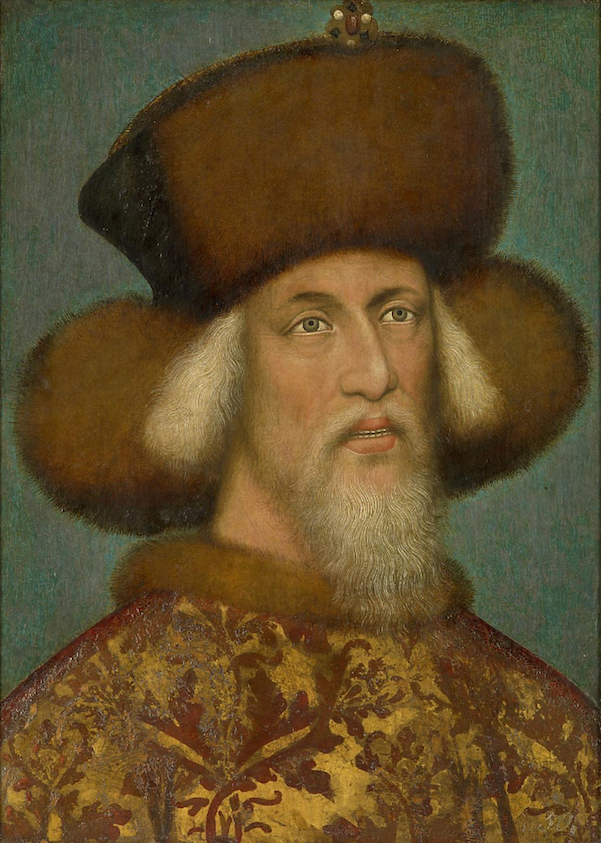

The dragon, contrary to modern assumptions, was not worshipped.
It represented the dragon subdued under the Cross a symbol of disciplined power brought into service of God. Members swore to embody courage, loyalty, sacrifice, and unwavering resistance against those who threatened Christendom.
Upon his initiation, Vlad II earned the title Dracul, derived from the Latin draco meaning dragon.
His son would become known as Drăculea. The Son of the Dragon.
Growing Up Between Two Worlds
History rarely grants its heroes peaceful childhoods.
As part of a political agreement, young Vlad and his younger brother Radu were sent as hostages to the Ottoman court.
For years, Vlad lived among the very empire that would later become his greatest enemy.
He learned their language.
He studied their military organization.
He observed their discipline.
He witnessed both the brilliance and brutality of Ottoman power.
Many historians believe these years forged the iron within him.
Where others saw captivity, Vlad found education.
Where others learned submission, he learned his enemy.
The Sword at Europe's Frontier
During the fifteenth century, Wallachia (part of today's Romania) occupied one of the most dangerous frontiers on Earth.
To the south stretched the Ottoman Empire, expanding relentlessly after the fall of Constantinople in 1453.
Kingdom after kingdom collapsed beneath its armies.
Serbia.
Bulgaria.
Much of the Balkans.
The road toward Hungary, Austria, and the heart of Europe lay increasingly open.
Wallachia stood directly in its path.
Its prince carried responsibilities far beyond his small realm.
If Wallachia fell, the frontier moved north.
If Wallachia endured, Europe gained precious time.
Terror Against Terror
Modern readers often recoil at Vlad's methods.
Impalement.
Psychological warfare.
Collective punishment.
Yet these actions cannot be understood without acknowledging the brutal realities of fifteenth-century frontier warfare.
The Ottoman military machine relied not only on overwhelming force but also on fear. Entire populations could be enslaved, deported, or massacred after conquest. Vlad responded with a strategy designed to make invasion prohibitively costly.
His most famous campaign came in 1462.
When Sultan Mehmed II, the conqueror of Constantinople marched into Wallachia with a massive army, Vlad refused open battle.
Instead, he used ambushes, scorched-earth tactics, night raids, and relentless harassment.
The most famous was the Night Attack at Târgoviște, where Vlad attempted to strike directly at the Sultan's command tent.
This remains one of the finest examples of daring special operations in medieval warfare, demonstrating that strategy and audacity could overcome overwhelming numbers.

Although Mehmed survived, the assault shook the Ottoman army.
When they later approached Târgoviște, they encountered one of history's most infamous sights:
A vast field filled with thousands of impaled Ottoman soldiers.
Whether the exact numbers reported by chroniclers are accurate remains debated. What matters is the effect.
The psychological impact was devastating.
Even Mehmed reportedly recognized that defeating such an adversary would demand an extraordinary cost.

Defender of Christendom
Many European rulers condemned Vlad publicly while quietly admiring what he accomplished.
His campaigns delayed Ottoman expansion into Central Europe and bought valuable time for neighboring Christian kingdoms.
Pope Pius II praised resistance against the Ottoman advance.
Hungarian leaders viewed Wallachia as an essential buffer.
Even critics acknowledged Vlad's determination.
He understood something many rulers preferred to ignore:
Some frontiers cannot be defended by treaties alone.
Sometimes they require men willing to stand between civilization and conquest.
The Order of the Dragon: More Than a Symbol
The Order of the Dragon has often become the subject of speculation.
Modern fiction surrounds it with hidden conspiracies, secret lineages, and occult mysteries and in some of this is veiled also ancient knowledge......
Reality is both simpler and, perhaps, more profound.
Like many medieval chivalric orders, the Order employed rich symbolism rooted in Christian theology, Scripture, and the pre-christian ancient traditions. Medieval Christianity often expressed profound truths through symbols, sacred geometry, liturgy, and allegory. The dragon itself symbolized the forces of chaos and evil, while the Cross represented Christ's victory over them. To wear the dragon beneath the Cross was not an embrace of darkness but a declaration that strength must be disciplined and placed in the service of God.
Some esoteric traditions have associated the Order with esoteric teachings, sacred kingship, or hidden wisdom. While these ideas are difficult to verify historically, they reflect a broader medieval understanding that knighthood involved more than martial skill. A true knight was expected to cultivate spiritual discipline, moral integrity, and self-mastery alongside prowess in battle.
In this sense, the "mystery" of the Order was not secret magic but transformation: the forging of the inner man into a worthy defender of the faith.
The Warrior and the Shadow
Every warrior faces a paradox.
To defend peace, he must understand violence.
To preserve civilization, he must sometimes enter its darkest frontiers.
The medieval knight was expected to master not only his sword but also himself.
This is perhaps the deeper lesson of Vlad's life.
He reminds us that history is rarely divided into spotless heroes and irredeemable villains. Men who stand on civilization's frontiers often make choices that later generations, living in greater safety, struggle to comprehend.
That does not mean every action should be celebrated uncritically. Rather, it calls us to understand the world in which those choices were made.
Lessons for the Modern Protector
At Tribe 13, we do not seek to recreate the Middle Ages.
We seek to recover timeless virtues.
Vlad III Drăculea/Vlad the Impaler stands as a reminder that the role of the protector demands sacrifice, courage, and an unwavering commitment to duty. His life illustrates what it means to defend one's people when the odds are overwhelming and when comfort must give way to responsibility.
The true legacy of the Dragon is not cruelty.
It is vigilance.
It is resolve.
It is the willingness to stand at the frontier whether that frontier is physical, moral, cultural, or spiritual and refuse to surrender what is sacred.
Today, the enemies may no longer arrive on horseback beneath crescent banners. They come in different forms: moral confusion, social fragmentation, spiritual apathy, and the erosion of faith, family, culture, traditions and community.
The calling of the protector remains unchanged.
To cultivate strength without becoming tyrannical.
To carry authority with humility.
To unite courage with wisdom.
To wield power in service rather than domination.
These are the ideals that animated the great Christian chivalric orders of the past, and they remain the foundation of every authentic protector today.
The Dragon endures not as a symbol of fear, but as a reminder that every generation must produce men and women willing to stand watch over what is good, true, and holy.
For the flame of Christendom is not preserved by memory alone it is kept alive by those who choose, every day, to become its guardians.
For many Romanians, Vlad III Țepeș (Vlad the Impaler) is regarded as a national hero, though his legacy is complex and not without debate.
His heroic status rests on three main pillars:
1. Defender Against the Ottoman Empire
This is the primary reason he is honored in Romania.
2. A Strong and Just Ruler
Romanian folklore portrays Vlad as a prince who enforced justice without compromise.
Many traditional stories describe him punishing:
corrupt nobles
thieves
murderers
dishonest merchants
officials who abused their power
Whether every story is historically accurate is another matter, but these legends shaped his image as a ruler who established order in a turbulent age.
One famous Romanian legend says that he placed a golden cup beside a public fountain, and no one dared steal it because everyone feared his justice.
3. Symbol of Independence
Vlad is often remembered as one of Romania's great medieval rulers.
In the end of this article I share with you a video with some scenes from an old romanian movie Vlad the Impaler. You can select the English subtitle to understand the language.
Stay safe all and may God protect you and your families!

Griffin,
I hadn’t known this history about Vlad. I now understand why he is a National Hero in Romania.
Thank you for this insight to a great warrior.
Courier